
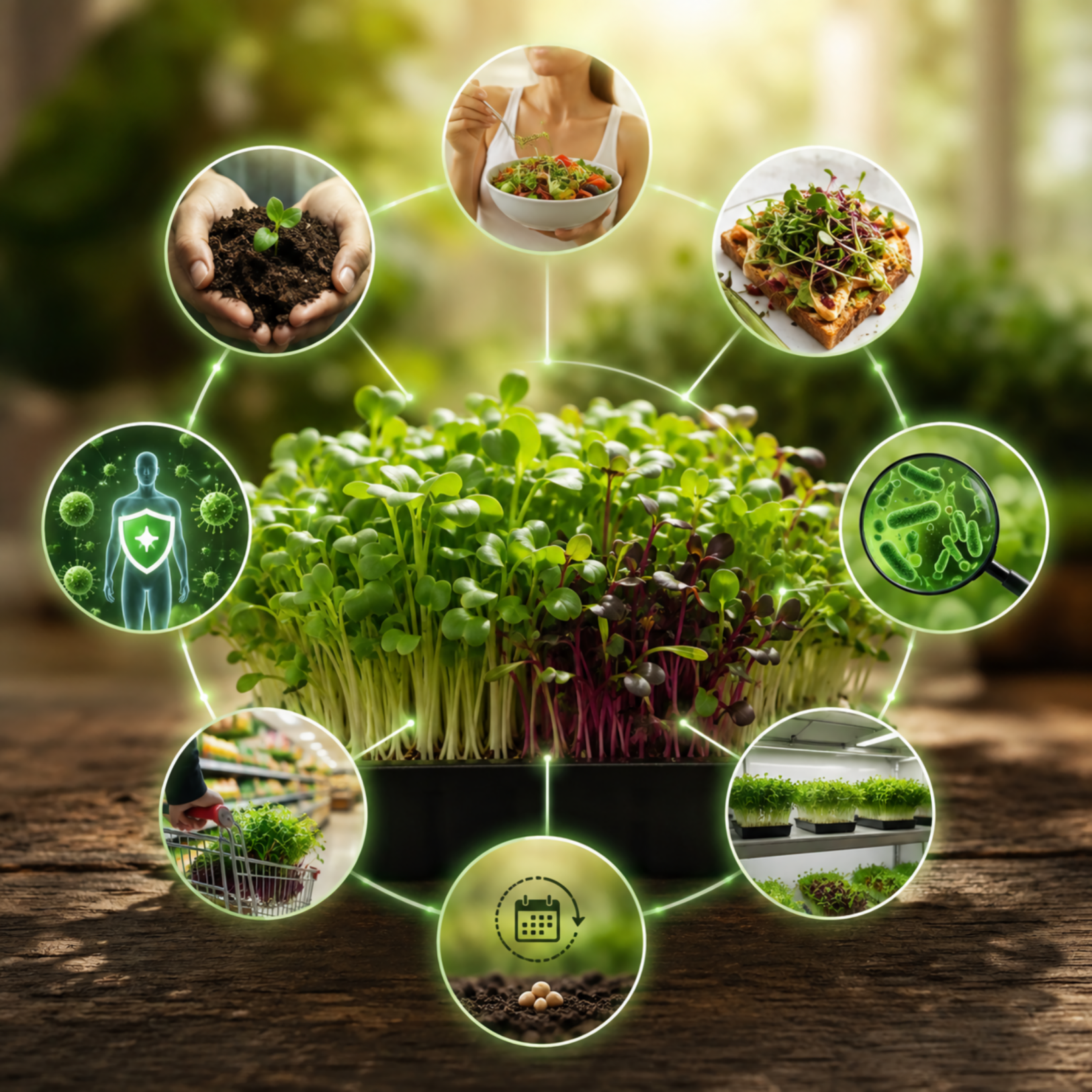
The Nutritional Awakening The tipping point for microgreens' mainstream popularity occurred in 2012, following a landmark study published by the University of Maryland and the USDA. Before this, microgreens were largely assumed to possess the same nutritional profile as mature vegetables, just in a smaller package. The study analyzed 25 commercially available microgreen varieties and shocked the dietary world: on average, microgreens contained four to forty times more concentrated vitamins and carotenoids than their mature plant counterparts. For example, red cabbage microgreens were found to have 40 times more Vitamin E and six times more Vitamin C than mature red cabbage. This data transformed microgreens from a chef's plaything into a legitimate "superfood." In an era where consumers were becoming increasingly health-conscious and obsessed with nutrient density, microgreens offered a highly efficient way to consume massive amounts of vitamins and phytonutrients without having to eat pounds of raw vegetables. An Explosion of Taste and Texture Beyond health, microgreens gained traction because they genuinely taste incredible. A mature vegetable spends a massive amount of its energy building structural integrity-fibrous stalks, thick skins, and expansive root systems. A microgreen, however, has dedicated all of its energy into the cotyledons. This results in an incredibly concentrated, pure flavor profile. • Spicy/Pungent: Radish, mustard, and arugula microgreens deliver a sinus-clearing punch of allyl isothiocyanate (the same compound that gives wasabi its heat). • Sweet/Earthy: Beet and chard microgreens taste intensely of rich, sweet earth. • Nutty/Crunchy: Sunflower shoots have a thick, succulent stem that snaps cleanly, releasing a flavor remarkably similar to raw sunflower seeds or fresh green almonds. • Herbal/Aromatic: Micro-cilantro, basil, and dill offer the intense aromatic oils of the mature herbs but with a much softer, more palatable texture. Visual Appearance and the Psychology of Color Human beings are visual eaters; evolutionary biology dictates that we associate bright, vibrant colors with nutrient density and freshness. Microgreens exploit this biological hardwiring perfectly. They offer a visual spectrum that is difficult to achieve with traditional ingredients. Amaranth provides a shocking, almost fluorescent magenta. Red cabbage offers deep, royal purples. Mustard greens offer bright, contrasting lime greens and deep burgundies. When scattered over a pale soup, a piece of roasted meat, or a monochrome grain bowl, microgreens instantly elevate the dish from mundane to professional, engaging the diner's visual appetite before they take a single bite. Sustainability and the Urban Farming Movement The rise of microgreens has perfectly coincided with growing global anxieties regarding climate change, food miles, and agricultural sustainability. Modern consumers want to know where their food comes from and how it impacts the planet. Microgreens are the ultimate urban crop. Because they do not require deep soil profiles, they can be grown on multi-level racks extending from the floor to the ceiling. A 500-square-foot room can produce the same yield as several acres of traditional farmland. This spatial efficiency has given rise to the Urban Farming movement. Derelict shipping containers, abandoned warehouses, and unused commercial spaces in the heart of major cities are being converted into thriving microgreen farms. This localization means that a box of microgreens sold at a city grocery store was likely harvested less than five miles away, merely hours prior. This complete circumvention of the traditional, fossil-fuel-heavy agricultural supply chain strongly appeals to eco-conscious consumers.
Controlled Environment Agriculture (CEA) The popularity of microgreens is also a testament to the success of CEA. Traditional farming is at the mercy of droughts, floods, early frosts, and pest infestations. CEA completely isolates the crop from the natural world. By growing indoors, farmers can guarantee a consistent, high-quality product 365 days a year. This reliability is highly attractive to restaurants and grocery stores that require a steady, uninterrupted supply chain. The use of sterile growing mediums and strict biosecurity protocols inside these facilities also means that microgreens can be grown completely free of chemical pesticides, herbicides, and fungicides, checking yet another box for modern consumers seeking clean, organic food.