
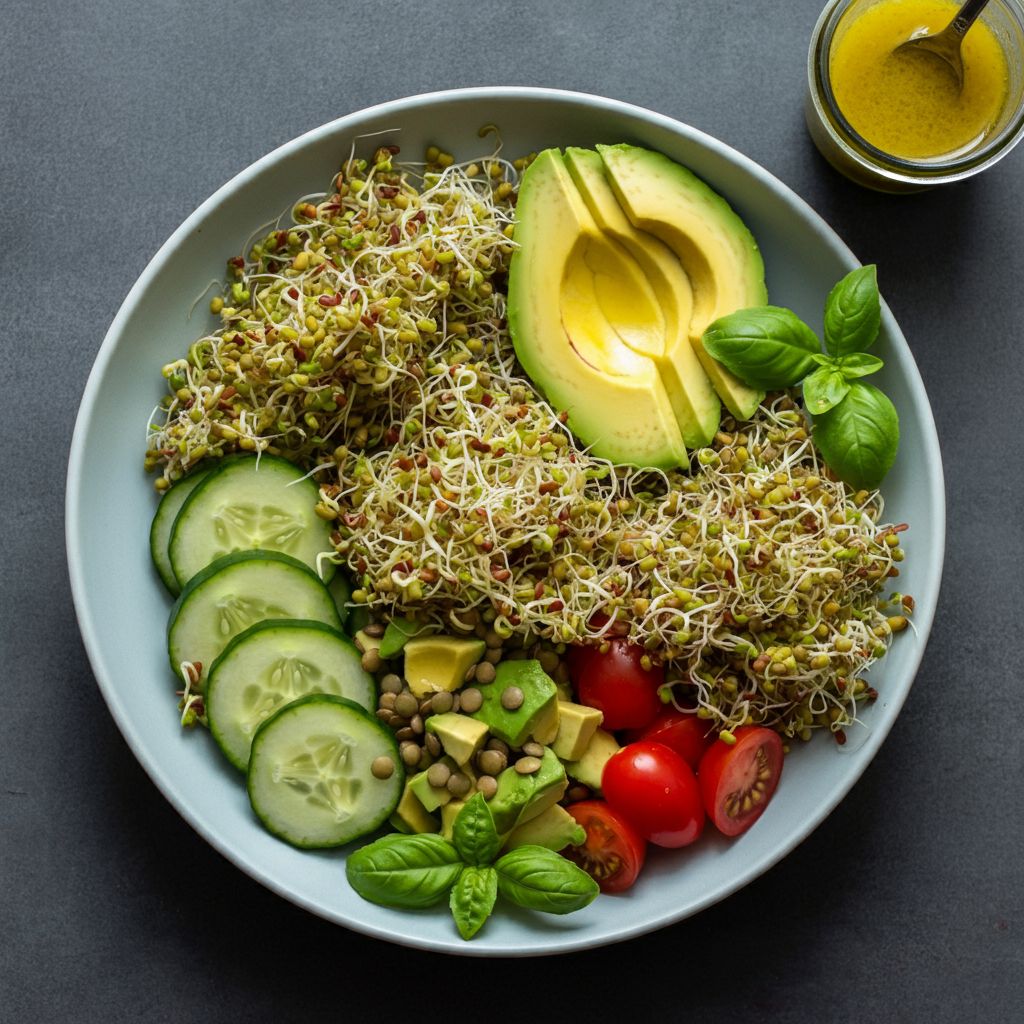
Sprouts: Sprouts are the youngest of the three. They are germinated seeds grown entirely in an aquatic environment, either submerged in water or kept in high-humidity sprouting jars. Crucially, sprouts are grown in the dark or in very low light conditions, meaning they do not undergo significant photosynthesis. Because of this, they are pale, stringy, and mostly water and raw seed proteins. When you consume a sprout, you consume the entire organism: the remaining seed hull, the embryonic root system, and the pale shoot. From a food safety perspective, the warm, wet, nutrient-rich conditions required for sprouting are identical to the ideal breeding conditions for bacterial pathogens like Salmonella and E. coli. This makes raw sprouts a known vector for foodborne illness.
Microgreens: Microgreens sit squarely in the middle. Unlike sprouts, microgreens require a growing medium-this can be organic soil, coconut coir, peat moss, hemp mats, or even specialized hydroponic felt. They require abundant light (either natural sunlight or specialized horticultural LEDs) and constant ventilation to develop properly. Through photosynthesis, they develop deep, vibrant colors and complex flavor profiles. When harvesting microgreens, only the above-ground portion (the stem and cotyledon leaves) is clipped and consumed. The root system and the spent seed hull remain in the growing medium. Because the edible portion never touches the warm, moist root zone, and because they are grown with ventilation and light, microgreens carry a significantly lower risk of bacterial contamination compared to sprouts.
Baby Greens: If a microgreen is left unharvested, it continues to grow. The cotyledons eventually senesce (wither and fall off), and the plant develops multiple sets of "true leaves," which possess the shape and texture of the mature plant's foliage. At this stage-typically 3 to 6 weeks after germination-the plant is considered a baby green. Examples include baby spinach, baby kale, or the mesclun mixes found in grocery stores. Baby greens are larger (usually 4 to 6 inches), more fibrous, require chewing, and have a milder flavor profile that closer resembles the adult vegetable.