
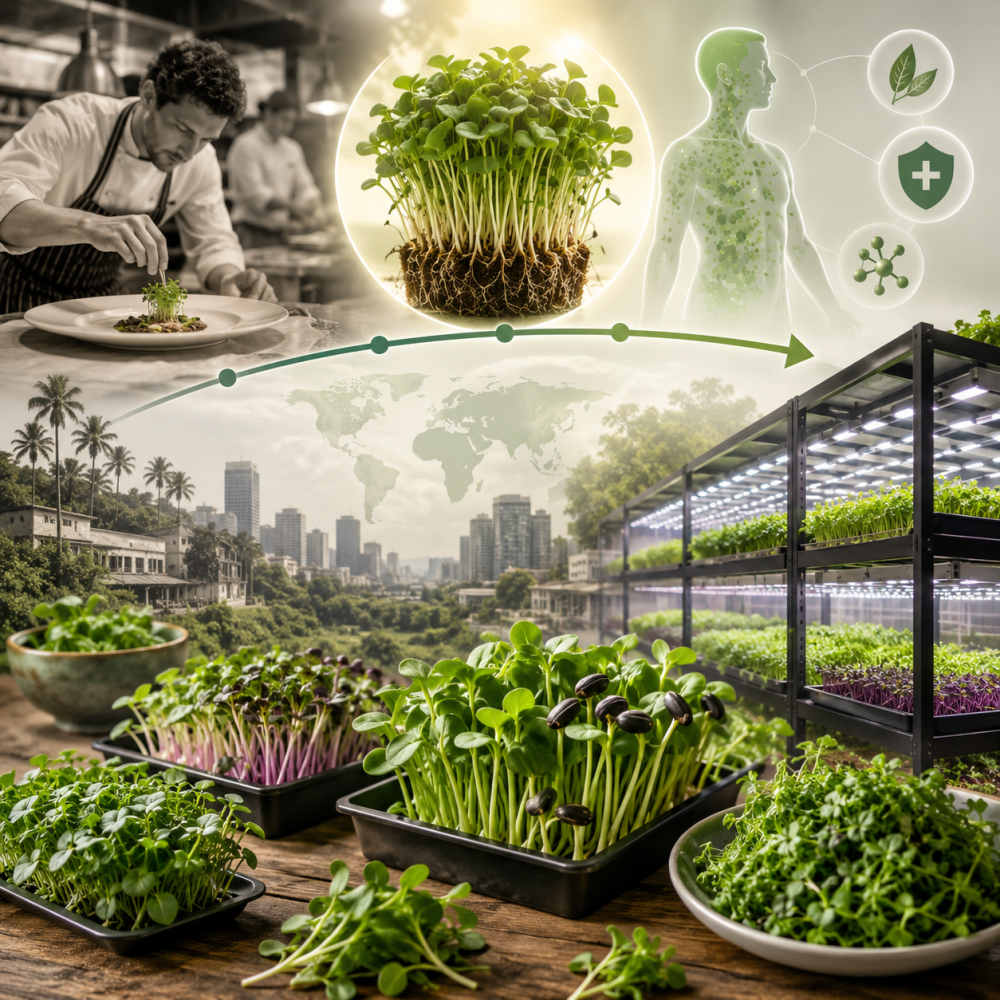
Origins in California During the 1980s The genesis of microgreens is deeply intertwined with the evolution of American gastronomy, specifically the "California Cuisine" movement of the 1980s. Before this era, garnishes in American restaurants were largely relegated to a perfunctory sprig of curly parsley or a wedge of lemon. However, chefs in Southern California and the San Francisco Bay Area began prioritizing hyper-local, hyper-fresh ingredients. They worked closely with local market gardeners to source unique produce. In the late 1980s, visionary chefs began requesting that farmers harvest crops prematurely. The earliest documented use of what we now call microgreens occurred in San Francisco, where a very limited selection-primarily arugula, basil, beets, kale, cilantro, and a blend known as a "rainbow mix"-began appearing on plates. These were not used as mere decorations; they were utilized to provide sharp, concentrated bursts of flavor that complemented the lighter, more ingredient-focused dishes of the era.
Adoption by Gourmet Chefs Through the 1990s, microgreens transitioned from a localized Californian curiosity to a nationwide culinary phenomenon. The rise of fine dining establishments in New York, Chicago, and Los Angeles created a fierce arms race for unique ingredients.
Chefs discovered that microgreens offered an unprecedented level of control over a dish's flavor architecture. A chef could impart the exact essence of a fully grown, spicy radish onto a piece of delicate sashimi using just two tiny, purple micro-radish leaves, without overwhelming the texture of the fish with a massive chunk of root vegetable. Furthermore, microgreens allowed chefs to construct verticality on the plate, creating architectural, three-dimensional presentations that looked stunning in food photography-a medium that was rapidly gaining influence. Expansion into Europe and the Molecular Gastronomy Movement By the early 2000s, the microgreen movement crossed the Atlantic. European chefs, steeped in centuries of culinary tradition, initially viewed them with skepticism. However, the rise of the "New Nordic" cuisine in Scandinavia-championed by restaurants like Noma in Copenhagen-which focused heavily on foraging, wild herbs, and hyper-seasonal young plants, provided a natural gateway. Simultaneously, the Molecular Gastronomy movement in Spain and the UK embraced microgreens. Chefs using foams, spheres, and gels needed contrasting textures and vibrant, natural aesthetic elements to ground their highly scientific dishes back in the natural world. Micro-cilantro, micro-mint, and micro-shiso became essential tools in the modernist kitchen. Commercial Production and Technological Integration For the first two decades of their existence, microgreens were plagued by supply chain issues. They were incredibly delicate, difficult to transport, and had to be grown by boutique farmers who charged exorbitant prices.
This changed in the 2010s with the advent of accessible Controlled Environment Agriculture (CEA) technology. Advances in horticultural LED lighting allowed growers to produce perfect crops indoors without relying on the sun. This decoupled microgreen production from traditional agricultural land and weather patterns. Warehouses in urban industrial parks were transformed into high-density vertical farms. Growers learned to optimize spectral output-using specific ratios of red and blue light to manipulate the shape, color, and flavor of the greens. They utilized automated climate control systems to manage humidity, temperature, and airflow to the decimal point, practically eliminating crop losses due to mold or poor germination.
The Current Global Market Today, microgreens are no longer an obscure luxury ingredient. The global market has exploded into a multi-billion-dollar industry, projected to grow exponentially over the next decade. The democratization of microgreens means they are now readily available in mainstream supermarkets, local farmers' markets, and even through direct-to-consumer subscription models. Furthermore, the barrier to entry for cultivation is incredibly low. A thriving subculture of home growers and small-scale "agripreneurs" has emerged, operating highly profitable micro-farms out of spare bedrooms, basements, and garages, serving their immediate local communities.